

Making money online isn’t just about finding the right strategy or mastering the latest marketing technique. The real secret lies in developing the mental framework that allows you to persist through setbacks and transform failures into stepping stones toward success.
After studying successful digital entrepreneurs and neuroscientific research on resilience, I’ve discovered something remarkable: your mindset literally rewires your brain for success or failure. Entrepreneurs who thrive online don’t just have better strategies—they have fundamentally different neural patterns that help them process setbacks as feedback rather than defeat.
If you’re starting your online money-making journey, this guide will show you how to develop the psychological foundation that separates successful digital entrepreneurs from those who quit after their first failures.

Why Your Brain is Your Biggest Asset (Or Obstacle)
When you start trying to make money online, your brain faces an unprecedented challenge. Unlike traditional employment where you trade time for predictable income, online entrepreneurship throws you into uncertainty, delayed gratification, and constant learning.
Our brains are wired to interpret uncertainty as threat. When your first attempts to monetize online fail, your amygdala starts firing warning signals that trigger fight, flight, or freeze responses. This is why so many people abandon their online ventures within months—their brains are working against them.
But here’s the fascinating part: successful online entrepreneurs develop different neural activation patterns compared to those who struggle. They show increased connectivity between brain regions associated with cognitive flexibility and exploratory choices, allowing them to maintain analytical thinking under stress.
The good news? These neural patterns aren’t fixed. Through deliberate practice and the right mental frameworks, you can rewire your brain for online success.
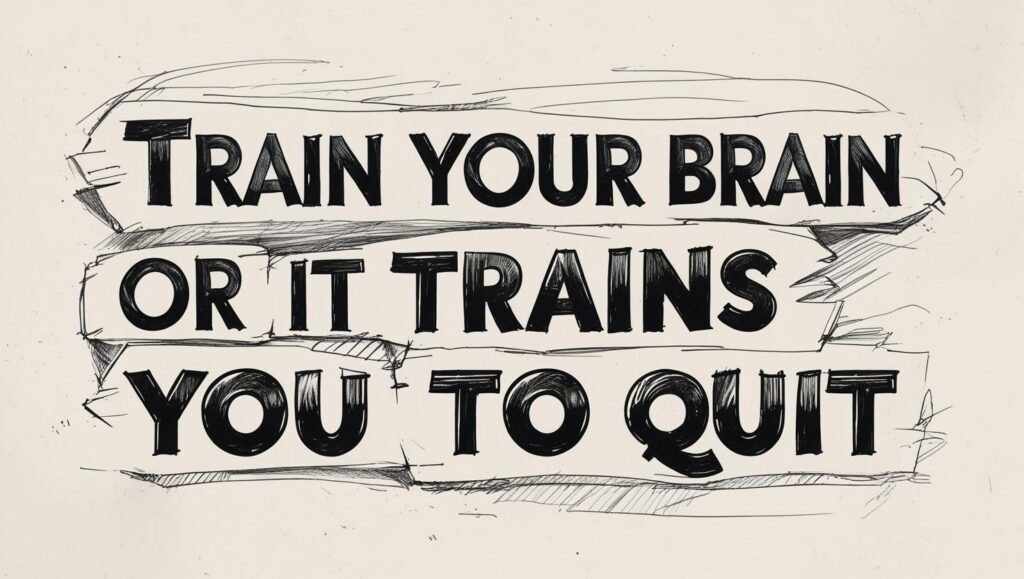
The Failure-to-Feedback Transformation
Reframing Your Relationship with Setbacks
The most crucial shift you need is transforming how your brain processes failure. Instead of seeing failed attempts as evidence you’re not cut out for online business, train your brain to interpret them as valuable market feedback.
This isn’t just positive thinking—it’s neuroplasticity in action. When you consciously reframe failures as feedback, you strengthen neural pathways in your prefrontal cortex while reducing reactivity in emotional centers.
Practical Implementation:
The “Yet” Protocol: Instead of saying “I can’t make money online,” say “I can’t make money online yet.” This simple addition activates your brain’s reward anticipation system and maintains motivation.
Weekly Failure Audits: Every week, document three things that didn’t work and extract one lesson from each. This systematic approach trains your brain to automatically look for growth opportunities in setbacks.
Third-Person Analysis: When analyzing failures, write about them using third-person pronouns (“What could they learn from this?”). This technique reduces emotional reactivity and improves objective analysis.

Case Study: Pat Flynn’s Neural Transformation
Pat Flynn’s journey perfectly illustrates how the right mental framework transforms devastating setbacks into online success. In 2008, Flynn was laid off from his architecture job during the financial crisis—a classic stress-triggering event that could have led to learned helplessness.
The Challenge: Flynn’s brain initially processed his job loss as personal failure, activating stress responses that could have paralyzed his ability to take entrepreneurial risks.
The Reframing Process: Instead of interpreting setbacks as confirmation of inadequacy, Flynn implemented cognitive reappraisal. He began publicly documenting both successes and failures through transparent income reporting, which served two crucial functions:
- Objective Analysis: Public reporting forced analytical distance from emotional reactions
- Social Accountability: Sharing his journey created a supportive community that reinforced growth-oriented interpretations of setbacks
The Outcome: This systematic reframing strengthened Flynn’s cognitive flexibility while reducing stress reactivity. Smart Passive Income now generates multi-million dollar annual revenue through diversified income streams. More importantly, Flynn’s transparent methodology has become a framework for thousands of aspiring digital entrepreneurs.
Key Lesson: Flynn’s success wasn’t about avoiding failure—it was about developing neural patterns that automatically converted setbacks into actionable intelligence.

Building Your Psychological Resilience Framework
Research reveals that psychological resilience is the strongest predictor of success in online business. But resilience isn’t a personality trait—it’s a set of mental skills you can develop.
The Four Pillars of Digital Resilience
1. Emotional Regulation Under Uncertainty
Online business is inherently unpredictable. Your income might swing from $100 to $10,000 in a month, or vice versa. Successful entrepreneurs develop stress response systems that become less reactive to uncertainty over time.
Training Protocol:
- Practice controlled exposure to micro-failures (small experiments that might not work)
- Implement daily breathing exercises to strengthen stress recovery
- Track your emotional responses to setbacks
2. Cognitive Flexibility for Rapid Pivoting
Successful online entrepreneurs show greater gray matter density in brain regions associated with cognitive flexibility. This allows them to quickly adapt strategies when market conditions change.
Training Protocol:
- Set “pivot quotas” (deliberate strategy changes based on data)
- Practice divergent thinking exercises (generating multiple solutions to single problems)
- Regularly switch between different types of work to build neural flexibility
3. Delayed Gratification Tolerance
Online success often requires months of effort before significant income appears. Your brain’s reward system needs training to maintain motivation during long feedback loops.
Training Protocol:
- Track progress metrics beyond income (skills learned, network growth, content creation speed)
- Celebrate small wins daily to maintain motivation
- Use visualization techniques to strengthen future reward anticipation
4. Social Connection Despite Isolation
Working online can be lonely, but entrepreneurs with strong social connections show significantly lower stress responses during setbacks. Your brain needs community support to maintain resilience.
Training Protocol:
- Join mastermind groups focused on learning and growth
- Share your journey transparently
- Mentor others to activate social reward systems
The Daily Mental Maintenance Routine
Morning: Neural Priming (15 minutes)
- Review your long-term vision to activate goal systems
- Practice gratitude to regulate emotional baseline
- Set three learning intentions for the day
Midday: Stress Regulation Check (5 minutes)
- Monitor emotional state and stress signals
- Use breathing techniques if stress appears elevated
- Reframe any setbacks as feedback
Evening: Integration and Planning (10 minutes)
- Document lessons learned from the day’s activities
- Plan tomorrow’s experiments based on today’s feedback
- Visualize successful outcomes to maintain motivation

Overcoming Common Mental Traps
The Comparison Trap: Social media exposes you to highlight reels of successful entrepreneurs, triggering inadequacy responses. Focus on your own progress metrics and remember that everyone’s journey timeline is different.
The Perfectionism Paralysis: Your brain might demand perfect strategies before taking action, but online success requires rapid experimentation. Adopt a “minimum viable product” mindset—launch quickly, learn rapidly, iterate constantly.
The Shiny Object Syndrome: New opportunities constantly emerge online, triggering novelty-seeking systems and pulling you away from consistent effort. Establish clear criteria for evaluating opportunities and stick to your chosen path long enough to gather meaningful data.

Your Mental Success Metrics
For sustainable online success, track psychological indicators alongside business metrics:
- Stress Recovery Speed: How quickly you bounce back from setbacks
- Learning Velocity: How fast you extract lessons from experiments
- Emotional Stability: How well you maintain motivation during income fluctuations
- Adaptation Rate: How quickly you pivot strategies based on feedback
The Long-Term Mental Game
Building a successful online business requires sustained psychological fitness. Research shows that entrepreneurs who maintain their ventures long-term develop specific neural adaptations that support resilience.
Your brain will rewire itself based on how you consistently interpret and respond to challenges. Every time you choose to see failure as feedback, you strengthen neural pathways that support future success. Every time you maintain effort despite uncertainty, you build psychological capital that compounds over time.
Taking Action: Your Next Steps
- Start Your Failure Log: Begin documenting setbacks and extracting lessons immediately
- Find Your Community: Join groups of entrepreneurs who support growth-oriented failure analysis
- Implement Daily Mental Maintenance: Establish routines that support psychological resilience
- Track Mental Metrics: Monitor psychological indicators alongside business metrics
- Embrace the Timeline: Accept that meaningful online success typically requires consistent effort and learning over time

Final Thoughts
Making money online is ultimately a game of psychological endurance. The strategies matter, but your mental framework determines whether you’ll persist long enough for those strategies to compound into success.
Your brain is incredibly adaptable—it will support whatever patterns you consistently practice. If you train it to see setbacks as feedback, uncertainty as opportunity, and effort as investment, it will wire itself for long-term online success.
The entrepreneurs earning significant income online aren’t necessarily smarter or more talented. They’ve developed neural patterns that support persistence, learning, and adaptation in the face of inevitable challenges.
Start building your psychological foundation today. Your future online success depends more on your mental fitness than any specific strategy or technique.
Remember: every successful online entrepreneur started where you are now, with uncertainty, limited knowledge, and no guarantee of success. The difference is they developed the mental frameworks to transform that uncertainty into fuel for growth.
Your brain is your most powerful business tool. Train it well.