
Starting an online business can feel like stepping into a spotlight where everyone seems more qualified, more successful, and more “put together” than you. If you’ve ever hesitated to hit “publish” on a blog post, delayed launching your first product, or scrolled through LinkedIn feeling like everyone else has it figured out while you’re still learning, you’re experiencing something that affects 84% of entrepreneurs: imposter syndrome.
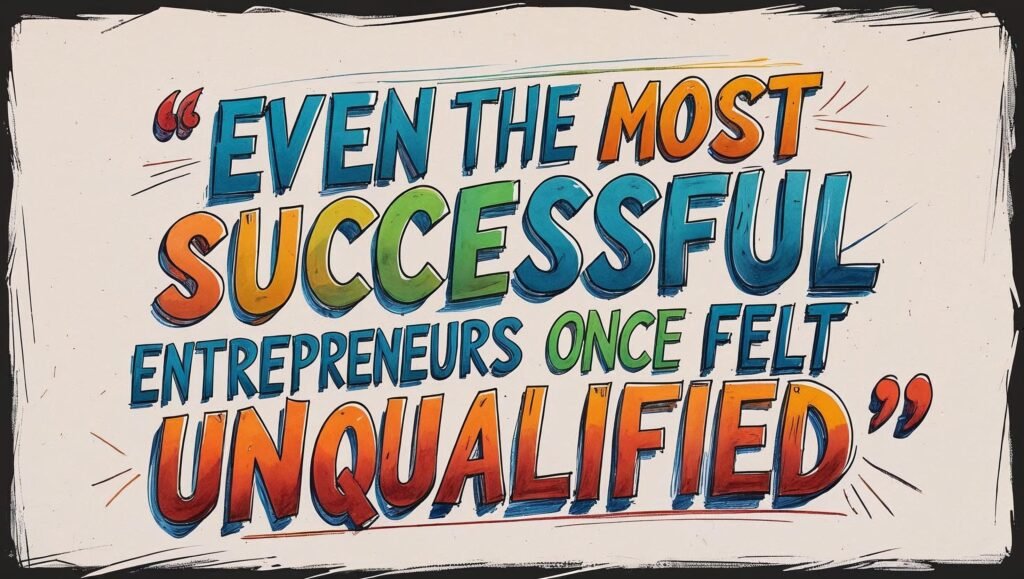
Here’s the truth that no one talks about in those glossy “I made $100K in 30 days” posts: even the most successful online entrepreneurs started exactly where you are right now, battling the same inner voice that whispers “you’re not qualified for this.”
What Exactly Is Imposter Syndrome and Why Does It Hit Online Entrepreneurs So Hard?
Imposter syndrome is that persistent feeling that you’re a fraud waiting to be exposed, despite evidence of your competence and achievements. For people starting online businesses, this feeling gets amplified for several reasons:
The highlight reel effect makes everyone else’s business look effortless on social media, while you’re struggling behind the scenes with technical issues and self-doubt.
The learning curve in digital marketing feels endless. Just when you master email marketing, someone mentions TikTok algorithms or AI tools, making you feel like a beginner again.
Working in isolation means you lack the daily validation and feedback you’d get in a traditional workplace, leaving more room for your inner critic to run wild.
The “expert” pressure online makes you feel like you need to know everything before you can start helping anyone, when in reality, you only need to be one step ahead of your ideal customer.
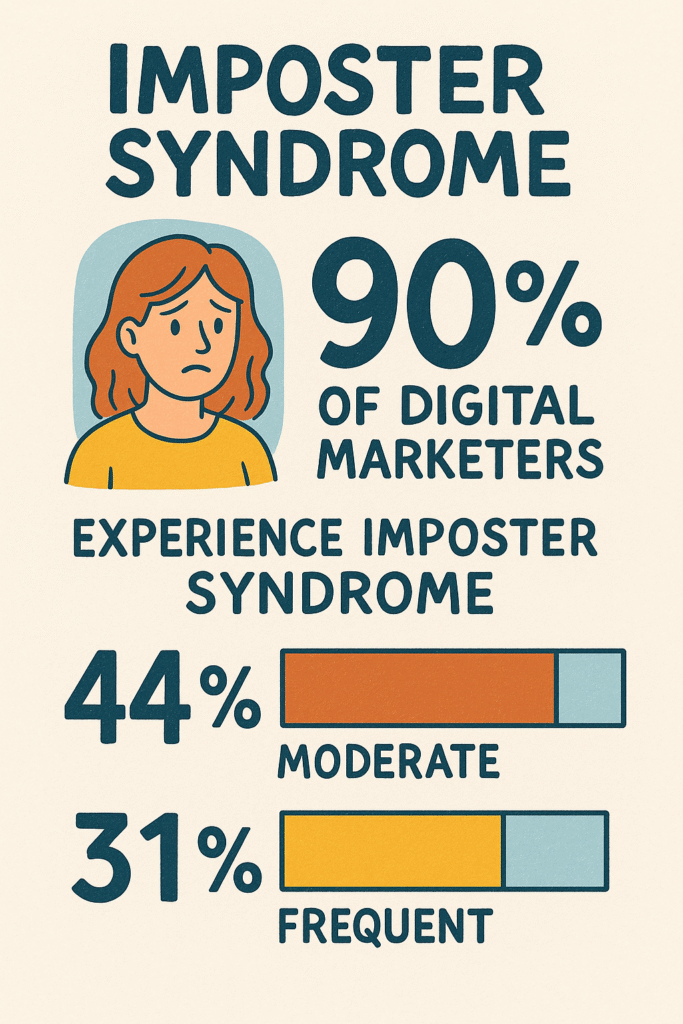
The statistics are staggering: research shows that over 90% of digital marketing professionals experience imposter syndrome, with 44% experiencing it at moderate levels and 31% at frequent levels. You’re not broken or weak – you’re experiencing something incredibly common that can be overcome with the right strategies.
Real Success Story: How Sarah Transformed Her Inner Critic Into Her Biggest Supporter
Sarah’s story perfectly illustrates how devastating imposter syndrome can be and how powerful the right strategies are for overcoming it. At 38, Sarah was a successful management consultant who decided to start an online coaching business. Despite her obvious expertise and track record, she felt like a complete fraud.
The breaking point came when Sarah’s imposter syndrome was controlling her life:
- She worked 70-hour weeks, constantly trying to “prove” herself
- She lay awake until 2 AM analyzing every client interaction, running mental movies she couldn’t switch off
- She attributed all her business wins to luck rather than skill
- She experienced physical symptoms like nausea before client calls
- She often wished something would happen so she’d have an excuse not to work
Sarah’s transformation came through targeted strategies:
She learned to recognize and challenge her negative thought patterns. When she caught herself thinking “I just got lucky with this client,” she’d ask herself: “What evidence supports this thought? What evidence contradicts it? Would I say this to a friend in the same situation?”
She started keeping a success journal, documenting what specific skills, decisions, and efforts led to positive outcomes in her business. When clients gave positive feedback, instead of dismissing it, she asked herself: “What did I do to create this positive experience?”

She joined a mastermind group where she discovered that even the most successful entrepreneurs had faced the same doubts and fears. This community connection was crucial – isolation makes imposter syndrome worse, while connection helps heal it.
The results were remarkable: Within six months, Sarah doubled her prices, reduced her workload by 30%, and reported feeling “incredibly liberated” both professionally and personally. Her relationships with her husband, friends, and family improved because she was no longer consumed by work anxiety.

How to Recognize When Imposter Feelings Are Sabotaging Your Success
Before you can overcome imposter syndrome, you need to recognize when it’s happening. Here are the warning signs that your inner critic is holding you back from building the online business you’re capable of:
You avoid visibility even though you know it’s crucial for business growth. You hide behind stock photos instead of showing your face, avoid video content, or delay launching because nothing feels “perfect enough.”
You undersell yourself consistently. You price your services lower than competitors, downplay your expertise in your bio, or offer endless free resources without asking for anything in return.
You experience analysis paralysis. You research endlessly but struggle to take action, rewrite your website copy dozens of times, or start multiple courses but never finish them.
You attribute success to external factors. When something goes well, you think “I got lucky” or “the timing was perfect” rather than acknowledging your contribution.
You work excessive hours trying to overcompensate for feeling “unqualified,” leading to burnout and resentment.
You avoid opportunities that could grow your business because you don’t feel “ready” yet, like speaking on podcasts, applying to be featured in publications, or pitching higher-level clients.
If you recognized yourself in these patterns, don’t worry. Recognition is the first step toward change, and there are proven strategies to shift these patterns.

Your Evidence-Based Toolkit for Building Unshakable Confidence
Strategy 1: Master the Art of Thought Challenging
Your thoughts aren’t facts, even though they feel true in the moment. Cognitive behavioral therapy techniques show us how to question the accuracy of our imposter thoughts.
The next time you catch yourself thinking imposter thoughts, try this process:
- Notice the thought without judgment: “I’m having the thought that I don’t know enough to charge premium prices.”
- Ask challenging questions: “What evidence supports this? What evidence contradicts it? How would I advise a friend thinking this?”
- Reframe with a balanced perspective: “I know more than my ideal customer and can help them achieve specific results.”
Strategy 2: Build Your Proof Portfolio
One of the most powerful ways to combat imposter syndrome is to collect evidence that contradicts your self-doubt. Start building a digital folder containing:
- Screenshots of positive customer feedback and testimonials
- Photos or records of your business milestones and achievements
- Thank-you messages from people you’ve helped
- Revenue growth charts and metrics
- Before-and-after examples of your work
Review this portfolio regularly, especially before important meetings, launches, or when self-doubt creeps in.
Strategy 3: Rewrite Your Success Story
Instead of attributing your wins to luck or external factors, practice identifying your specific contributions. Keep a weekly success journal using this format:
- What went well this week?
- What specific skills or decisions contributed to this success?
- What does this tell me about my capabilities?
This practice literally rewires your brain to internalize your accomplishments rather than dismissing them.

Strategy 4: Find Your Tribe
Research consistently shows that community connection is one of the most effective treatments for imposter syndrome. Actively seek out:
- Online entrepreneurship groups and forums
- Local business meetups or co-working sessions
- Mastermind groups in your industry
- Social media communities where you can share struggles and wins
When you share your experiences and listen to others’ stories, you’ll quickly discover that the most successful entrepreneurs have faced the same doubts you’re experiencing.
Strategy 5: Take Imperfect Action
Confidence builds through action, not contemplation. Set a goal to do one thing each week that feels slightly uncomfortable but moves your business forward:
- Publish a blog post or social media content
- Reach out to a potential collaborator
- Apply for a speaking opportunity
- Launch a beta version of a product
- Raise your prices by 10%
Remember: done is better than perfect, and your expertise grows through experience, not endless preparation.

Case Study: From Kitchen Table Doubts to Thriving Business
Maria started her sustainable skincare business feeling completely unqualified to compete with established brands. She avoided showing her face in marketing materials, priced her products 40% below market rates, and wrote 23 podcast pitch emails that she never sent.
Her transformation followed this path:
Phase 1: Mindset Work (Days 1-10)
Maria started success journaling using the S.T.A.R. method:
- Situation: What happened?
- Task: What needed to be done?
- Action: What did you do?
- Result: What was the outcome?
Example entry: “Negotiated first wholesale order (Situation) by calculating MOQ pricing (Task) using competitor analysis spreadsheet (Action) resulting in $2,400 sale with 35% profit margin (Result).”
Phase 2: Skill Building (Days 11-20)
Maria enrolled in a pricing mastery program and learned value-based pricing frameworks. Her average order value increased from $47 to $89 through strategic pricing tiers.
Phase 3: Community Connection (Days 21-30)
Joining an entrepreneur mastermind group provided accountability, collaborative opportunities, and boosted her Instagram reach by 400%.
The results: Within six months, Maria’s business crossed $1.2M annual revenue, and she became confident appearing on camera and charging premium prices.

Your 30-Day Confidence Building Action Plan
Week 1: Foundation Building
- Day 1-3: Create your proof portfolio by collecting existing testimonials, positive feedback, and achievement records
- Day 4-7: Set one SMART goal for your business using this format: “Increase [specific metric] by [percentage] through [specific action] by [date]”
Week 2: Mindset Rewiring
- Day 8-10: Start daily success journaling, documenting three things you did well each day and the skills that contributed
- Day 11-14: Practice thought challenging when imposter feelings arise, questioning the evidence for and against your self-doubt
Week 3: Skill Development and Action
- Day 15-17: Choose one business skill to improve and dedicate 25 minutes daily to learning and practicing
- Day 18-21: Take one “uncomfortable” action that moves your business forward, like publishing content or reaching out to a potential client
Week 4: Community and Visibility
- Day 22-24: Join one online entrepreneurship community and introduce yourself
- Day 25-28: Share one piece of content that showcases your expertise or personality
- Day 29-30: Connect with three people in your network and ask for specific feedback about your strengths

Ongoing Maintenance:
- Continue success journaling weekly
- Practice thought challenging whenever imposter feelings arise
- Stay connected with your entrepreneurship community
- Take monthly action that stretches your comfort zone
- Review your proof portfolio regularly
The Truth About Building an Online Business
Here’s what successful online entrepreneurs know that beginners don’t: confidence isn’t a prerequisite for success – it’s the result of taking consistent action despite your fears. Every expert was once a beginner, every guru once felt like a fraud, and every successful business started with someone who felt unqualified but chose to begin anyway.

Your expertise doesn’t need to be perfect to be valuable. You don’t need to know everything to help someone. You don’t need to eliminate all self-doubt to build a thriving business. You just need to be one step ahead of the people you’re helping and brave enough to share what you know.
The online world needs what you have to offer – your unique perspective, your specific skills, and your authentic voice. Imposter syndrome wants you to believe you don’t belong, but the truth is that your success is not only possible but inevitable when you apply these evidence-based strategies consistently.
Remember: every time you choose action over perfection, you’re not just building a business – you’re building the confidence that will carry you through every challenge and opportunity ahead. Your entrepreneurial journey is valid, your successes are earned, and you belong in this space just as much as anyone else.
The only difference between you and the successful entrepreneurs you admire is that they started before they felt ready. Today is your day to do the same.
